Objective
The blog will cover a trip through Japan by folding Bike and Public Transport from Sapporo through to Kagoshima with visits to a niece in Akita in Honshu and Kumamoto, Kyushu and possibly a side visit to Fukuoka.
『心の豊かな暮らしを創る』
It's going to be a blast! Cycling in the shadow of
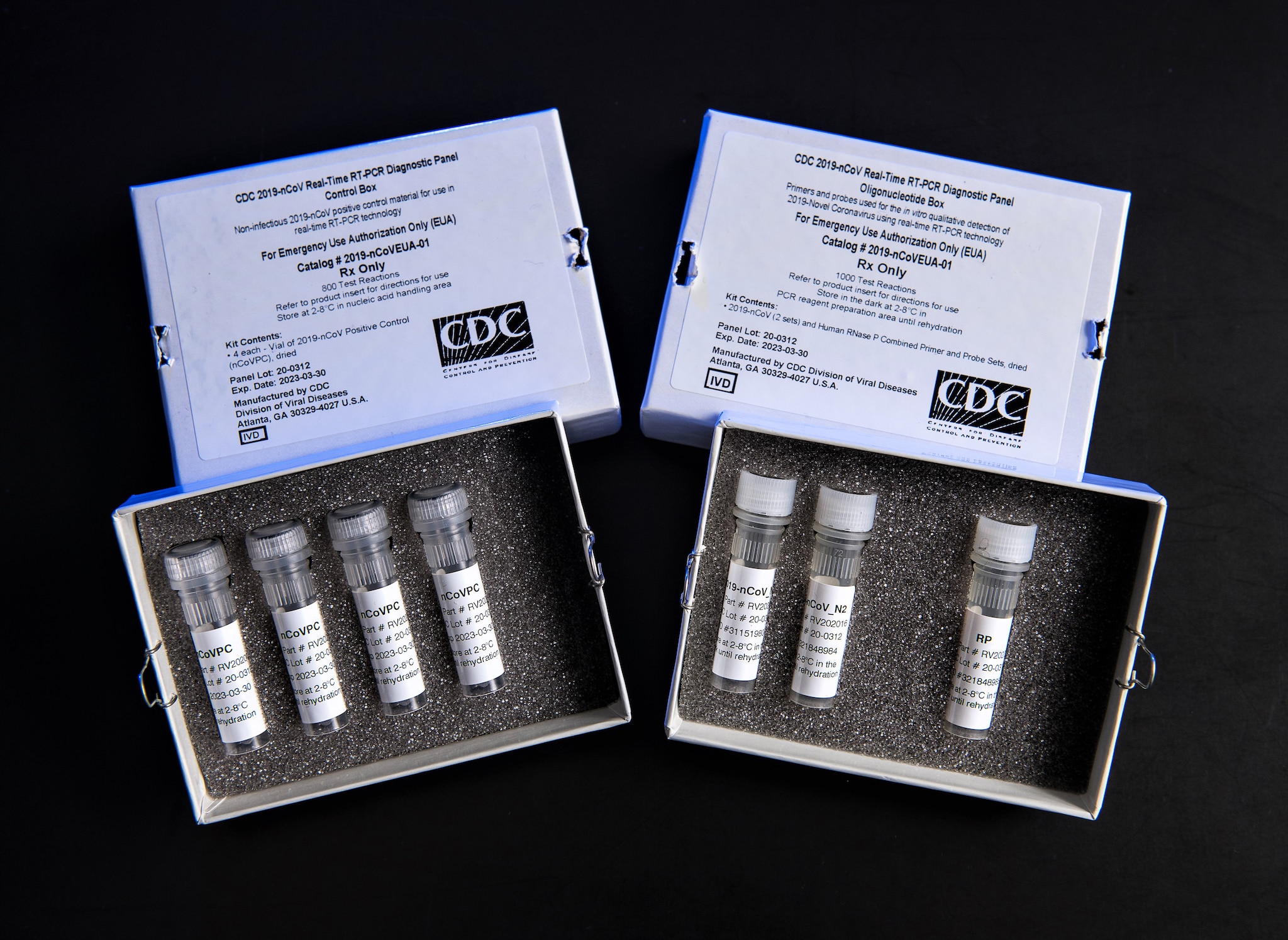
“SARS-CoV-2”
Route Planning:
Cyclanoie
Detailed TOPO maps of Japan
Hokkaido Wilds TOPO maps
Weather:
https://www.jma.go.jp/jma/indexe.html
https://www.jma.go.jp/jma/indexe.html
Wind Directions
Passable Route Map
Departure from Ottawa
Sapporo
Sapporo > Wakkanai (train), ferry to Rishiri
Rishiri > Wakkanai
(train) > Sapporo
Sapporo 88 km > Marukoma at Lake Shikotsu
Lake Shikotsu > Lake Toya
Lake Toya > Oshamambe
Oshamanbe 62 km > Mori
Mori 123 km > Hakodate
Hakodate > Aomori
(Train) Goshogawara > Akita
Akita > Tsuroka (100km)
Tsuroka > Murakami (65 km)
Murakami > Kashiwazaki (100 km)
Kashiwazaki > Itoigawa (60 km)
Itoigawa > Toyama (60 km)
(Train) Toyama > Kyoto
Kyoto 87 km > Kobe
Kobe 70km > Himeji
Himeji> Okayama (80 kim)
Okayama > Onomichi (80 km)
Onomichi > Imbari (83 km) ferry at Onomichi
I
Imbari > Yawatahama (100 km)
ferry to Beppu > Taketa (65 km)
Taketa > Kumamoto 75 km
Kumamoto > Yatsushio 65 km
Yatsushiro > Ebino
Ebino > Kirishima
Kirishima > Kagoshima
>Cheryl may join
Tokyo - Return
I started with Alan Booth's Classic Route from his book "
The Roads to Sata" but realized there was little point to Soya to Sata trip due to time limitations and the desire to see more of the nuances of the country.
He was fixated on walking the whole distance.
Others are fixated on cycling the whole distance.
I am pragmatically trying to see as much of the country as I can by both cycling and using public transit (rail). I want to meet the Japanese although I realize that I may speak mostly to the younger generation as a "Gaijin". I'll embrace that, its not like a 6'2", bald, grey haired, blue eyed, unilingual English can just blend in.
2020 06 07 The CoV19 is currently an issue. 17,000 cases in Japan and a lock down with no entry for any citizen of North America.
B
ut first here is Booth's actual route, based on his book. These links allow you to zoom in and look at the roads and towns, some have street views.
| Map One |
Map Two |
Notes |
|
|
 |
|
|
Phase 1 - Get to Sapporo then Get to Hakodate
|
 |
 |
Notes |
 |
 |
Notes |
|
|
Onward to Honshu Island from Hokkaido
|
|
|
Shimonoseki (at the honsho/kyushu strait) “Karato Sanbashi Kanmon Pedestrian Tunnel. (bikes can be pushed)
|
The ryokan at Tobetsu was recommended by Booth.
As a result the trip looks a bit different than Booth's epic journey!
|
Notes |
Notes/ Photos |
|
|
First after the train up to Wakkanai, a ferry to Rishiri and a circumnavigation of the volcano...for starters.
|
|
|
Back on down to Sapporo by train then bike on to Lake Shikotsu via hwy 453 (stock up on supplies - nothing in between) |
Placeholder |
|
|
Placeholder |
Then on to Hakodate |
|
|
Then after ferry from Hakodate to Aomori, the train to Akita |
Placeholder |
|
|
Back on the bike from Akita to Tsuruoka |
Placeholder |
|
|
Tsuruaoka to Murakami |
Placeholder |
|
|
Notes on West Japan
https://www.havehalalwilltravel.com/7d6n-muslim-friendly-west-japan-itinerary |
Placeholder |
|
|
|
Kashwazaki to Itoigawa
|
|
|
|
Itoigawa to Toyama, then Toyama to Kyoto
|
|
|
|
Kobe to Himeji then Himeji to Okayama
|
|
|
|
Okayama to Onamichi then ONAMICHI TO IMBARI
|
|
|
|
| https://jw-webmagazine.com/the-ultimate-guide-to-cycling-trip-in-shimanami-kaido-a730b262211d/ |
The Shimanami Kaido Bike Route then Imbari to Yawatahama
|
|
|
|
Yawatahama to Beppu then Beppu to Taketa
|
|
|
|
Taketa to Kumamoto then Kumamoto to Yatsushiro
|
|
|
|
Yatsushiro to Ebino then Ebino to Kinoshima
|
| Map One |
Map Two |
Notes |
Once at Kiroshima the amount of time available has to be assessed on whether to procede to Kagoshima. From Kagoshima one can fly back to Tokyo if need be.
Useful Links:
Windfinder – Japanese coast line is kind of boring
Sakura Mobile –Sakura data SIM card and it was brilliant. data SIM Google Maps (GM),
Open Street Map (OSM) (can be used offline)
AirBnB - Every night plan the next day with 60km to 100km distance target.
Map for FREE CAMPING, FREE HOT SPRINGS and MICHI-NO-EKI's (Roadside stations) all over Japan.
Icons explanation on this link -> https://www.facebook.com/photo.php?fbid=1772223196136304&set=gm.1743313882633496&type=3
Before you start... The locations contained within this map are the result of months of hard working with city local authorities, tourists associations and also from travelers adding new locations from within this map.
Don't forget to subscribe to: Free Hot Springs and Free Camping in Japan https://www.facebook.com/groups/wildcampingjapan/
and our group of cycling touring and hiking in Japan:
https://www.facebook.com/groups/alt.2600/
If you like the map, contribute by adding a new location yourself like an undiscovered spot, your best interesting place or reporting an issue via our facebook group (Please send us the address or coordinates). We also have a Cycling Touring Hiking and Friends in Japan group:
https://www.facebook.com/groups/alt.2600/
The map also includes onsens under JPY500 and hostels up to JPY3,500 and around 1000 "Michi no Eki". Michi-no-Eki means “Roadside Station” in Japanese. The Michi-no-Eki system was launched 20 years ago to create a safe, comfortable road traffic environment, and unique, lively spaces that showcased the individuality of a region. Each Michi-no-Eki has three distinct features: “Refresh” – Rest facilities that include free 24-hour parking and restrooms. “Community” – Regional co-operation where cultural centers, tourist attractions, recreation and other local development facilities promote interaction with the region. “Information” – Where road, tourist and emergency care information is readily available. Free Wi-Fi, toilets, shops, restaurants, parkings, information centers, fax, credit cards, post offices, some with camping and onsen, and much more! Japan is usually perceived as a very expensive country to visit; however, it is actually very possible to travel in Japan on a very tight budget.
Perhaps the biggest way of massively cutting down your expenses is to do wild camping.
You can effectively reduce your travel costs to food and admission fees alone. As per my knowledge wild camping on public land is theoretically illegal and wild camping on private property requires the landowner's permission.
My personal opinion is that, if you pitch up a tent or even sleep on a bench in an out-of-the-way place so that you don't disturb anybody and don't make a mess, you're unlikely to be disturbed either.
1) Here are some tips from other sites: - Pitch your tent late and head out early. - Respect for the interests of other people. - Act with courtesy, consideration and awareness. - Care for the environment. - Take responsibility for your actions. Remember that the outdoors cannot be made risk free. - Act with care at all times for your own safety and that of others and be as discreet and as unobtrusive as you can. - It should also be noted that you should try to be nomad as much as possible, i.e. stay no more than 2 -3 consecutive nights at one place. - If police ask you to move – then do so, and ask them where it would be OK to camp for the night. They should be friendly – especially to a tourist who is only at that spot for one night. (Living 25yrs in Japan, I've never heard about whats the fine for wild camping) -
On private properties always ask for permission to landowner's. - Look after the places you visit and enjoy and leave the land as you find it. Fortunately, you can benefit from the "foreigner factor", which makes everyone much more tolerant of you. However, it is a good idea to keep in mind that you are indeed doing an activity that stands on the margins of society, and so you should strive to be as discreet and respectful as possible when camping, so as to give the idea that you are a respectful traveler rather than a rude foreigner trying to freeload off Japan and its people.
2) Rural Areas Small towns' public parks will almost always be perfect. However, there are a few other possible ways to sleep in rural areas. - In rural areas, you can often find shrines at such places, make yourself known to the neighbors first. Shrines are always open (as opposed to temples which usually close for the night), usually empty, and they give a terrain for you to sleep on. - Even though temples close for the night, it is usually possible to sleep in the parking lot of the temples (if it is a rural temple). If you arrive at a temple and there is someone there (a monk or someone tending the grounds), you can ask them if there is anywhere you can sleep. Sometimes, they will direct you to the parking lot and they will let you use the temple's facilities. Obviously, if they tell you that you cannot sleep there, be respectful and don't sleep in the parking lot. -
Michi-no-eki (meaning "Road Station") are rest stops on the side of the road all over Japan. There are always toilets, vending machines, etc. You can almost always find rest huts there. Some michi-no-eki are open 24h so you can sometimes sleep inside. - If there is really nothing available, you can usually sleep in empty, out-of-the-way parking lots. - In rural Japan, pretty much anywhere where you do not bother other people or step on private property is a good spot (ex: shore, beach, forest, under a bridge...).
Note that fields are private property and by sleeping there you also destroy people's fields, which is not very nice. - There are over 3,000 campsites all over Japan with prices ranging from 200 to 1,000 yen per night (*Some of them for free)
3) Washing yourself For washing yourself, there are a few methods. - Public parks and toilets - If the weather is warm, you can wash in public parks, using available water. Sometimes the parks have toilets for handicapped people, which usually consist of a room with a toilet and sink, and is lockable; very convenient for washing ! -
Public baths and onsen - If it's cold outside or you do not want to wash in public parks or toilets, you can go to
onsen (hot springs) or sento (public baths).
In practice there is no real difference between the two, so just ask for the cheapest (they are usually around 400 yen). - Internet cafes. In the big internet cafes there are sometimes showers available. They are usually free (if you also use the computers) but there is some fee. By the way, almost all Internet Cafes "unlimited free drinks" policy!
4) Washing your clothes - For washing your clothes, you can do it by hand or find laundromats (coin laundry), which can be found pretty much anywhere. Note: This procedure has worked well for me, but despite of our best efforts it is possible that some information of this group may be inaccurate, incomplete or out of date, so please contact in advance to ensure availability and use at your own risk. I'm not responsible for the use and accuracy of these information. Thank you for your understanding. Enjoy! james Note:
Do not copy and edit without written permission. Copy Rights James Oda (alt.2600.jp@gmail.com)
Train options
| Note: purchase
discounted Japan Rail tickets directly from the train stations in Japan. |
La Malle de Bois
Okayama Prefecture to Hiroshima Prefecture
Setouchi Marine View, Kurashiki, Onomichi, Takehara, Kure, and finally Hiroshima
Tsuyama Line and later the Inbi Line
old railway depot and heritage museum
Tottori Station: "Ametsuchi" to the Sea of Japan
http://bit.ly/CRWestJPChangiWiFi
Osaka Prefecture
rapi:t Mt. Koya
Hyogo Prefecture
Super Hakuto
Hamakaze to the Kinosaki Hot Spring
hot-spring town on the Ueda Line on the Nagano Electric Railway
JR Oito Line runs along the foot of the majestic Northern Alps
Mojiko in Kitakyushu, Fukuoka Pref
undersea tunnel to Shimonoseki
Hagi, Yamaguchi Pref
Nagara River in Gifu Prefecture
72.1km north-south along the stream is the Nagaragawa Railway
2 hours and includes 38 stations
Hisatsu Orange Railway runs across the west coast of the island of Kyushu
connecting Kagoshima and Kumamoto Prefectures
Yatsushiro to Sendai Station
Kagoshima's samurai traditions to Kumamoto's hot springs
Asahikawa Station
to Shiretoko-Shari Station (to sea of Okhotsk)
Miyagi coastline across northeast Japan
Tsugaru Railway Sea of Japan on the JR Gono Line
Konan Railway
Miyazaki, located in southeastern Kyushu 170 kilometers from north to south trains named "Sunshine" or "Nichirin" Takanabe Station, Sun train transfer to the Nichinin Line,
Aoshima (island), (devil's washboard). OBI, Nichinan Miyazaki, sun messe Nichinan
Nango, on the Miyazaki Nichinan Line (bumpy ride), to Kushima (then off to Cape Toi)
| Aichi 愛知 22. Chubu 中部 | | Akita 秋田 3. Tohoku 東北 | | Aomori 青森 2. Tohoku 東北 | | Chiba 千葉 13. Kanto | | Ehime 愛媛 37. Shikoku 四国 | | Fukui 福井 19. Chubu 中部 | | Fukuoka 福岡 40. Kyushu | | Fukushima 福島 7. Tohoku 東北 | | Gifu 岐阜 20. Chubu 中部 | | Gunma 群馬 9. Kanto | | Hiroshima 広島 34. Chugoku 中国 | | Hokkaido 北海道 1. | | Hyogo 兵庫 24. Kansai | | Ibaraki 茨城 10. Kanto | | Ishikawa 石川 16. Chubu 中部 | | Iwate 岩手 4. Tohoku 東北 | | Kagawa 香川 36. Shikoku 四国 | | Kagoshima 鹿児島 46. Kyushu | | Kanagawa 神奈川 14. Kanto | | Kochi 高知 39. Shikoku 四国 | | Kumamoto 熊本 43. Kyushu | | Kyoto 京都 25. Kansai | | Mie 三重 29. Kansai | | Miyagi 宮城 6. Tohoku 東北 | | Miyazaki 宮崎 45.Kyushu | | Nagano 長野 18. Chubu 中部 | | Nagasaki 長崎 42. Kyushu | | Nara 奈良 28. Kansai | | Niigata 新潟 15. Chubu 中部 | | Oita 大分 44. Kyushu | | Okayama 岡山 33. Chugoku 中国 | | Okinawa 沖縄 47. Kyushu | | Osaka 大阪 27. Kansai | | Saga 佐賀 41. Kyushu | | Saitama 埼玉 11. Kanto | | Shiga 滋賀 26. Kansai | | Shimane 島根 32. Chugoku 中国 | | Shizuoka 静岡 23. Chubu 中部 | | Tochigi 栃木 8. Kanto | | Tokushima 徳島 38. Shikoku 四国 | | Tokyo 東京 12. Kanto | | Tottori 鳥取 31. Chugoku 中国 | | Toyama 富山 17. Chubu 中部 | | Wakayama 和歌山 30. Kansai | | Yamagata 山形 5. Tohoku 東北 | | Yamaguchi 山口 35. Chugoku 中国 | | Yamanashi 山梨 21. Chubu 中部 |
|
| |

| Chubu 中部 15,16,17,18,19,20,21,22,23 |
| Chugoku 中国 31,32,33,34,35 |
| Hokkaido 北海道 1. |
| Kansai 関西 24,25,26,27,28,29,30 |
| Kanto 関東 8,9,10,11,12,13,14 |
| Kyushu & Okinawa 九州・沖縄 40, 41,42,43,44,45,46,47 |
| Shikoku 四国 36,37,38,39 |
| Tohoku 東北 2,3,4,5,6,7 |